
Vittorio Pace è lieto di invitarvi al seminario:
Simple-Looking but Non-Obvious Transformations
di Guangbin Dong, The University of Chicago, Department of Chemistry, Chicago, IL, USA
Il seminario si terrà lunedì 16 marzo alle ore 12 in Aula 'La Ginestra', ed. Cannizzaro (CU014).
Abstract
Late-stage functionalization has become an increasingly important strategy for increasing structural diversity of analogues in drug discovery. However, the current late-stage functionalization tactics remain limited, mostly centered on C-H functionalization. In this talk, three simple-looking but non-obvious transformations will be discussed, which allow for unusual late-stage modifications of complex molecules. The first transformation promotes directed saturation of unactivated arenes, leading to site-selective conversion of a benzene ring into a cyclohexane ring in complex molecules. The second transformation enables simultaneous
installation of two chemically different boryl groups side-by-side into common aryl triflates or chlorides, resulting in divergent regioselective difunctionalization. The third one represents an "atom swap" strategy, which replaces a carbonyl group with a heteroatom, such as sulfur or nitrogen. This method can efficiently introduce saturated heterocycles from readily available cyclic ketones, and the application includes rapid conversion of readily available steroids into the corresponding thia- and azasteroids.
Prof. Guangbin Dong
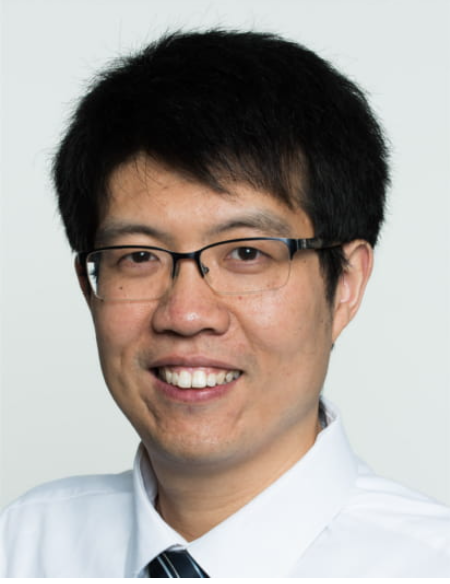 Guangbin Dong is the Weldon G. Brown Professor of the Chemistry Department at the University of Chicago. After receiving a B.S. degree from Peking University, he completed his Ph.D. degree in chemistry at Stanford University with Professor Barry M. Trost, where he was a Larry Yung Stanford Graduate fellow. In 2009, he began to research with Professor Robert H. Grubbs at California Institute of Technology, as a Camille and Henry Dreyfus Environmental Chemistry Fellow. In 2011, he joined the department of chemistry and biochemistry at the University of Texas at Austin as an assistant professor and a CPRIT Scholar. In 2016, he became a Professor of Chemistry at the University of Chicago. Since 2023, he has been the first chair of the Weldon G. Brown Professorship.
His current research interests include activation of inert bonds, total synthesis of bioactive natural products, boron chemistry, and graphene nanoribbons. For example, his team explores catalytic C-C bond activation as a useful tool for constructing or modifying complex molecular skeletons. Additionally, he is a leading contributor to the palladium/norbornene catalysis, which enables site-selective arene functionalizations and carbonyl transposition. Moreover, his team has invented new activation modes for functionalizing C-H bonds of carbonyl compounds. Finally, his work in boron chemistry enables skeletal modification of heterocycles, efficient preparation of azaborines, and programmable organic synthesis. As a research advisor, Guangbin has trained over 60 PhD students and postdoc researchers. Guangbin’s favorite motto is “Hire the best people…..then get out of their way” (from Arnold Beckman).
Guangbin Dong has produced more than 220 publications/patents. His achievements have won him numerous awards including the Elias J. Corey Award for Outstanding Original Contribution in Organic Synthesis, Mukaiyama Award, the Tetrahedron Young Investigator Award, the Arthur C. Cope Scholar Award, Mitsui Chemicals Catalysis Science Awards, the Sloan Research Fellowship, the Searle Scholar Award, and an NSF CAREER Award. He has been a fellow of American Association for the Advancement of Science since 2024.